Banabhata – Kadambari
I pulled this one from the Small Works List (World 300 – 1000 AD). The only note that I had there was a 4 letter name, Bana. I went to the Google, and found out that Bana was one of the most celebrated authors of this era of Indian writing. He wrote two famous works, the Harshacharita (Deeds of Harsha - a history of his era of India), and Kadambari (a Hindu romance). For whatever reason, it did not seem possible to find a way to engage with the Harshacharita whether I couldn’t find a readable copy or whatever, so I chose Kadambari.
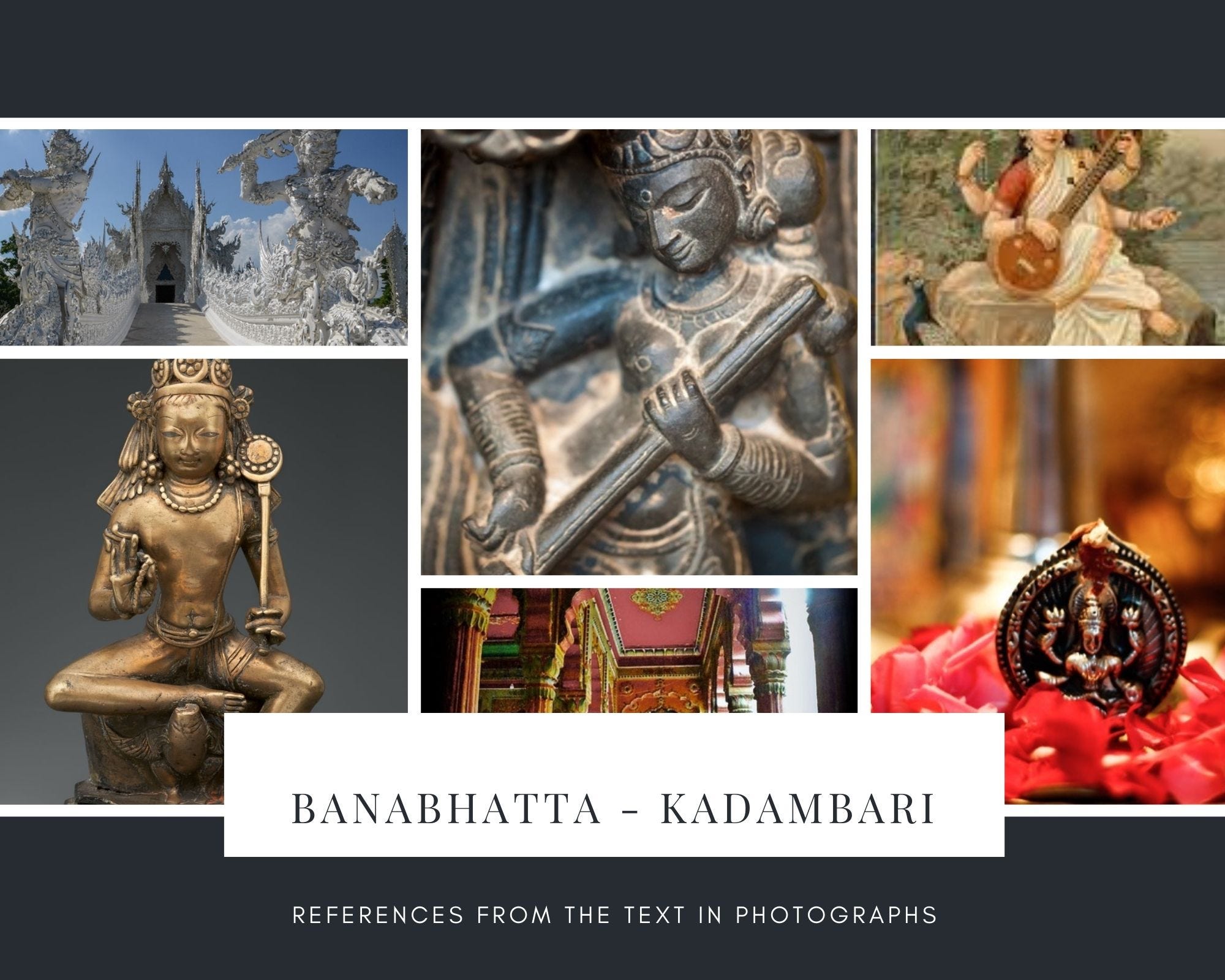
I will say here that I loved the first half of this book. I have never encountered a text like Kadambari. I am not sure if this is common for Sanskrit or Hindu based texts, but the whole thing felt like a dream. The lyrical descriptions of very minimal activities was magical to follow. It was difficult to parse at times what was happening as I was reading something written in English and translated very well.
Translator’s Corner here – C.M. Ridding translated Kadambari from the Sanskirt in 1896. For whatever reason, that is still the translation in use for the Penguin edition of this book in 2021. Ridding has a very brief Wikipedia page which suggests that she is a minor historical figure who was probably one of the first female scholars of Sanskrit, Bengali and Pali languages in England and helped develop the field of female scholarship at the time though outside of this translation there is not much more known.
Kadambari is a hard book to follow.
Let me see if I can do it from memory, the novel begins with a Prince who is just sort of laying in his palace. A candela maiden comes to him holding a parrot in a cage. There is some digression about whether parrots are the souls of the reincarnated or just a simple mimic to the world around them. This is a fascinating point. The candela maiden tells her story then the parrot starts to talk. The parrot tells the story of being a parrot and some mountaineers come and eat his dad. The parrot is injured and is taken to be cared for by the monks. Jabali is one of the monks in this story and he tells the parrots story to the gathered around. The parrot in a previous life was a well to do prince who goes off to war but wanders off on his own way and runs into another maiden in the forest weeping by a hidden lake. The prince doesn't fall in love with this maiden because she is weeping because she gave her heart to someone else. The maiden brings the lost prince to her mistress, Kadambari, who is the person that the prince falls in love with. Kadambari and Candaripa fall in love and he invites his parents to come to Kadambari's place so that they can meet her. In the intervening time, it appears that maybe they cannot be together and Candaripa goes home to meet his parents and persuade them to allow him to do this thing. Candaripa feels like maybe this isn't going to happen, heads off on his own and dies between home and Kadambari's place. Everyone mourns his death. Kadambari pledges to not move on from him. Candaripa's death reveals that he is actually a god of some sort (I don't want to oversimplify this point because I think it was beautiful but I do not understand a lot of what is happening here) and then the place of his death becomes a shrine.
I think this is what happens, and I loved every minute of it.
Here’s what I know. I don’t know anything about this culture, and after reading this book I want to sort of know everything. The way that the Hindu concepts of Dharma, Karma, and Brahma influence the way these characters interact and the sort of epistemology of the context this story is situated in is fascinating to me. I asked a World Religions professor to give me 5 minutes on the Hindu religion to help me navigate what was happening and it was oddly helpful. The lyrical, dream like quality of the writing was enchanting and at points I didn’t want it to end. Along the way, Banabhatta would refer to some deeply situated piece of content from Hinduism: Lakshmi, Saravasti, Rahu, etc. I would look up this story and be sort of swept away trying to figure out why it was referenced which was sort of like the feeling of reading the book but now I am lost in a million digressions on my own. I don’t think that I could pin down with my need for sort of Enlightenment epistemological certainty exactly what is going on in these stories. This is an ancient culture that has several iterations of stories from different traditions that all sort simultaneously are true at the same time. Such an endeavor to understand every aspect of this story is alluring to me in the same way this project seeks to understand all of classic literature. This is a branch that I will leave uninvestigated until such a time as another Sanskrit/Hindu text presents itself. This was an introduction; we will see how far this branch goes. I will say that I am interested in reading the story of Rama which feels like a whole universe onto itself. Also, I would like to learn more about the Mount Mandara story and the story of Lakshmi. These felt like certain mythologies to the story of Kadambari. Also, I know nothing about this history of India.
Comments
Post a Comment